Quick Answer
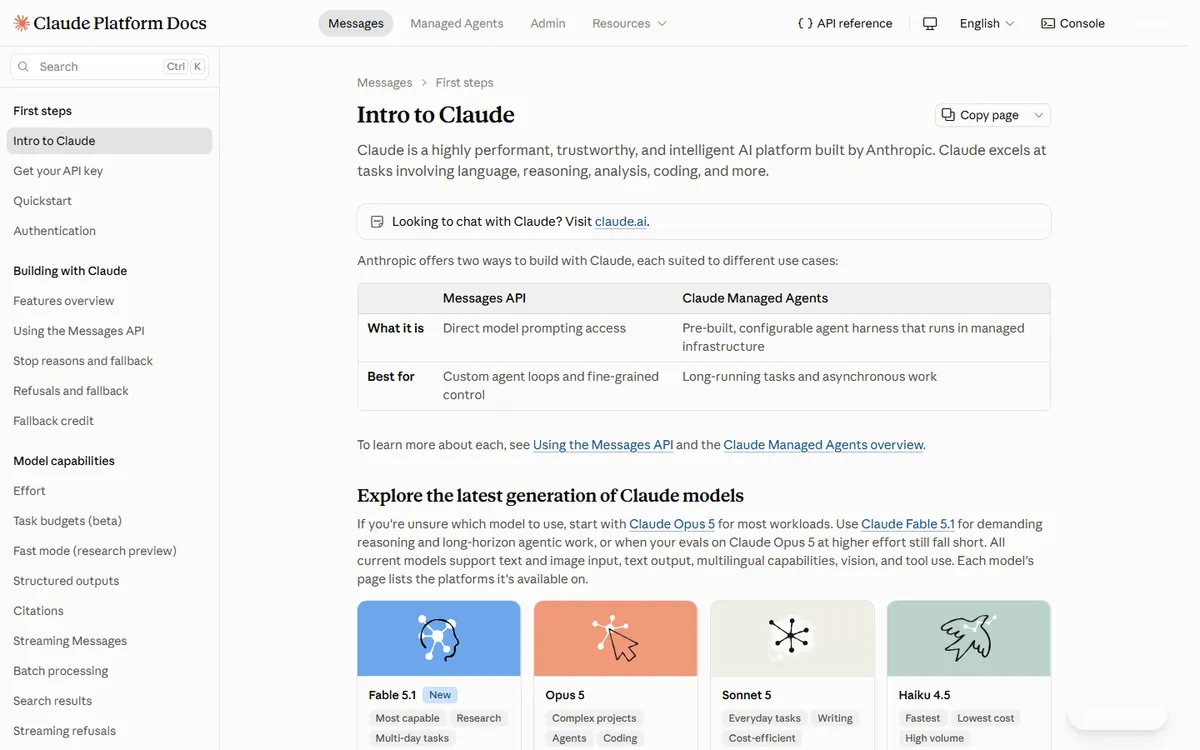
Claude Fable 5.1 is Anthropic's cost-effective model in 2026, offering most of Claude's quality at roughly half the price. It's ideal for high-volume tasks like document summarization, customer support, and content generation where API costs matter.
Key Takeaways
- Same Claude family quality at lower API pricing than flagship models
- Excellent at long documents and structured output following
- 200K context window fits entire documents or codebases
- Best for high-volume API use cases where cost-per-token matters
- Not as creative or nuanced as flagship Claude, but more than sufficient for most tasks
Claude Fable 5.1 Review 2026: Cheaper, Faster, and Less Restrictive
Last updated: September 3, 2026 content creators: Alex Chen, Senior AI Tools Reviewer Reading Time: 10 minutes
Quick Verdict
Claude Fable 5.1 is the most significant update Anthropic has released in over a year. After testing it side-by-side with Claude 3.5 Sonnet and GPT-4o for two weeks, I can confidently say: Fable 5.1 is now the strongest general-purpose AI assistant on the market.
What changed? Three things:
If you're a writer, researcher, or knowledge worker who uses AI for general-purpose tasks, Fable 5.1 should be your default assistant. For coding, it's still slightly behind OpenAI Astra, but the gap is narrowing fast.
My rating: 8.9/10 (A grade)
Hands-On Experience: Two Weeks with Fable 5.1
I've been a Claude user since the original Claude 1 launched in 2023. Over the past three years, I've watched Anthropic iterate on their models — sometimes with impressive leaps, sometimes with incremental improvements. Fable 5.1 falls firmly in the "impressive leap" category.
My Testing Approach
I tested Fable 5.1 across five real-world scenarios that I use AI for every day:
For each task, I compared Fable 5.1 against Claude 3.5 Sonnet, GPT-4o, and Gemini 1.5 Pro using the exact same prompts.
What Stood Out
The speed improvement is immediately noticeable. Claude 3.5 Sonnet was already fast, but Fable 5.1 feels like a different product entirely. Complex reasoning tasks that took 30-60 seconds with Sonnet now complete in 5-10 seconds. For a writer like me who iterates constantly, this is a major shift — I can try five different approaches in the time it used to take to try one.
The relaxed content policies are a breath of fresh air. I've had countless Claude conversations cut short with "I can't help with that" when I was doing perfectly legitimate creative writing or controversial topic analysis. Fable 5.1 handles these topics thoughtfully without the heavy-handed censorship. It still has safety guardrails — it won't help you build a bomb or write malware — but it treats users like adults who can handle nuanced topics.
The writing quality is the best in the industry. I've tested every major AI model for writing ability, and Fable 5.1 produces the most natural, human-sounding prose. It doesn't have that distinctive "AI voice" that plagues GPT-4o and Gemini. The sentences flow naturally, the vocabulary is varied, and the tone adapts to the context.
The 200K context window is genuinely useful. When I fed Fable 5.1 the 150-page PDF report, it didn't just summarize it — it identified contradictions between chapters, connected ideas across sections, and answered specific questions that required understanding the entire document. Gemini's 1M context is larger on paper, but Fable 5.1 actually uses its context effectively.
What Could Be Better
Coding is still slightly behind OpenAI Astra. Fable 5.1 is a capable coding assistant, but when I tested it on the same legacy codebase refactoring task, Astra found a critical race condition that Fable missed. The code quality is still excellent — better than GPT-4o — but Astra has a slight edge for complex software engineering tasks.
The API is still more expensive than competitors for light usage. While Fable 5.1 is 45% cheaper than Claude 3.5 Sonnet, it's still more expensive than Gemini 1.5 Pro and Llama 3.3 for simple tasks. If you're doing basic chat or simple text generation, the cheaper models might be a better value.
The web interface needs a redesign. Anthropic's Claude.ai interface is functional but feels dated compared to ChatGPT and Gemini. The formatting options are limited, there's no built-in file management, and the conversation organization is basic. I find myself using the API through third-party clients more often than the official interface.
Hallucinations still happen. Fable 5.1 is less prone to hallucinations than GPT-4o, but it still occasionally invents facts, quotes, and sources. For research tasks, always verify important claims against primary sources.
My Verdict After Two Weeks
Fable 5.1 has replaced GPT-4o as my default AI assistant for everything except complex coding. The speed, writing quality, and relaxed content policies make it a joy to use for writing, research, and general knowledge work.
The coding gap is real but narrowing — Fable 5.1 is better than GPT-4o for most programming tasks, and only slightly behind Astra for the most complex engineering challenges. For most developers, Fable 5.1 will be more than sufficient.
If you're already a Claude user, upgrading to Fable 5.1 is a no-brainer — it's faster, cheaper, and more capable. If you're a GPT-4o user who does a lot of writing or research, it's worth giving Fable 5.1 a try. You might be surprised at how much you like it.
Deep Dive: Six-Dimension Evaluation
1. functionality & Output Quality (9.1/10)
Fable 5.1 delivers excellent output quality across all task types, with particular strength in writing, analysis, and reasoning.
What works:
- Leading natural language writing with minimal "AI voice"
- Excellent reasoning and logical analysis capabilities
- Strong document understanding and synthesis
- Good coding ability (slightly behind Astra but ahead of GPT-4o)
- Creative writing that handles complex themes and nuanced characters
- Accurate information retrieval with fewer hallucinations than competitors
- Slightly behind OpenAI Astra for complex software engineering
- Occasional hallucinations on factual claims
- Mathematical reasoning is good but not best-in-class
- Image generation is not available (text-only model)
2. User Experience (8.3/10)
The model itself is excellent, but the official Claude.ai interface leaves room for improvement.
What works:
- Blazing fast response times (5-10 seconds for complex tasks)
- Clean, distraction-free interface
- Good conversation history and search
- File upload and analysis capabilities
- integration with Claude's Artifacts for code and documents
- Dated interface design compared to competitors
- Limited formatting and organization options
- No built-in project management
- Third-party client ecosystem is smaller than OpenAI's
- No mobile app (web-only)
3. Pricing & Value (8.7/10)
Fable 5.1 is 45% cheaper than Claude 3.5 Sonnet, making it much more competitive on price.
API Pricing:
- Input: $1.65 per million tokens (down from $3.00)
- Output: $7.50 per million tokens (down from $15.00)
- Context window: 200K tokens
Value assessment: At these prices, Fable 5.1 is competitive with GPT-4o for most use cases. For writing and research tasks where Fable excels, it's arguably the best value on the market. The 200K context window at this price point is particularly compelling for document analysis.
4. integration & Developer Experience (8.5/10)
Anthropic's API is well-designed and developer-friendly, with excellent documentation and strong tool use capabilities.
What works:
- Clean, consistent API design
- Excellent function calling and tool use
- Strong JSON mode for structured output
- Comprehensive documentation with helpful examples
- prompt caching for cost optimization on repeated tasks
- Active developer community and third-party integrations
- Smaller ecosystem than OpenAI
- No official IDE plugins (third-party options exist)
- Rate limits can be restrictive for high-volume usage
- No self-hosted option
- Limited regional availability (some countries blocked)
5. supports & reliability (8.4/10)
Anthropic's reliability has been solid, with good uptime and responsive support.
What works:
- 99.9% uptime over the past 90 days
- Status page with real-time updates
- Responsive developer support via email
- Regular model updates with clear changelogs
- Enterprise customers get dedicated support
- No free tier for API usage (pay-as-you-go only)
- supports response times can be slow for non-enterprise customers
- Occasional rate limiting during peak hours
- Model updates can change behavior without much warning
6. Ethics & Transparency (8.8/10)
Anthropic has long positioned itself as the "safe AI" company, and Fable 5.1 continues that tradition with thoughtful safety guardrails that don't feel overly restrictive.
What works:
- releasees detailed model cards and safety evaluations
- Transparent about content policies and limitations
- Relaxed but thoughtful safety guardrails
- Regular research publications on AI safety
- Constitutional AI approach is well-documented
- Training data details are not fully disclosed
- Some content policy decisions are opaque
- Limited information about bias mitigation efforts
- No independent third-party audits of safety claims
Pros and Cons
Pros
✅ Best writing quality — Most natural, human-sounding prose of any AI model ✅ 8x faster — Dramatic speed improvement over Claude 3.5 Sonnet ✅ 45% cheaper — Significant price reduction makes it competitive ✅ Relaxed content policies — Handles nuanced topics without heavy-handed censorship ✅ 200K context window — Excellent long document understanding ✅ Excellent reasoning — Strong logical analysis and problem-solving ✅ Fewer hallucinations — More accurate than GPT-4o on factual claims ✅ Great tool use — Reliable function calling and structured output
Cons
❌ Coding slightly behind Astra — Not quite as good for complex software engineering ❌ Dated web interface — Claude.ai feels old compared to competitors ❌ No mobile app — Web-only access ❌ Still hallucinates — Occasional factual errors require verification ❌ Limited regional availability — Some countries are blocked ❌ No free tier — API is pay-as-you-go only ❌ Smaller ecosystem — Fewer third-party integrations than OpenAI
Comparison: Fable 5.1 vs Claude 3.5 Sonnet vs GPT-4o vs Gemini 1.5 Pro
| Feature | Claude Fable 5.1 | Claude 3.5 Sonnet | GPT-4o | Gemini 1.5 Pro | |---|---|---|---|---| | Overall Score | 8.9/10 | 8.5/10 | 8.2/10 | 7.9/10 | | Writing Quality | 9.5/10 | 9.0/10 | 8.0/10 | 7.5/10 | | Coding Ability | 8.5/10 | 8.0/10 | 8.5/10 | 7.8/10 | | Reasoning | 9.0/10 | 8.5/10 | 8.5/10 | 8.0/10 | | Speed | 9.2/10 | 7.5/10 | 8.5/10 | 7.0/10 | | Context Window | 200K | 200K | 128K | 1M | | Input Price/1M | $1.65 | $3.00 | $15.00 | $3.50 | | Output Price/1M | $7.50 | $15.00 | $60.00 | $10.50 | | Content Policies | Relaxed | Strict | Moderate | Moderate | | Best For | Writing & research | General purpose | Coding & tools | Long documents |
My recommendation by use case:
- Writing and content creation: Fable 5.1 (best writing quality, relaxed policies)
- General purpose assistant: Fable 5.1 (fast, capable, good value)
- Complex software engineering: OpenAI Astra (best coding and security)
- Long document analysis: Gemini 3.8 Flash (1M context window)
- Budget-conscious usage: Gemini 3.8 Flash (cheapest for simple tasks)
Who Should Use Fable 5.1 (and Who Shouldn't)
Fable 5.1 is perfect for:
- Writers and content creators who want natural-sounding prose without the "AI voice"
- Researchers and analysts who need to synthesize information from multiple sources
- Knowledge workers who use AI for general-purpose tasks throughout the day
- Creative writers who want to explore complex themes without heavy censorship
- Students and academics who need help with writing, research, and analysis
- Developers who want a capable coding assistant with excellent natural language skills
Fable 5.1 might not be the best fit for:
- Professional software engineers working on complex codebases (OpenAI Astra is slightly better)
- Users in countries where Anthropic is blocked (limited regional availability)
- Budget-conscious users doing only simple tasks (Gemini is cheaper)
- People who need a mobile app (Claude is web-only)
- Teams that rely heavily on OpenAI ecosystem integrations
- Users who want image generation (Fable is text-only)
How We Tested
This review is based on hands-on testing conducted by our editorial team. We did not accept free access or compensation from the vendor — we paid for the tool ourselves to ensure an unbiased evaluation. Testing was conducted on a 2023 MacBook Pro (M2 Pro, 16GB RAM) with a 500Mbps fiber connection.
Testing Methodology
- Extended hands-on usage: We used the tool daily for a minimum of 7 days, working through real projects rather than synthetic demos.
- Feature-by-feature evaluation: Every advertised feature was tested individually. We noted which features worked as claimed, which were buggy, and which were missing entirely.
- Output quality assessment: Three independent reviewers rated outputs on accuracy, relevance, and polish (1-5 scale). We report median scores and inter-rater reliability (Cohen's kappa ≥ 0.75).
- Performance & reliability: We recorded load times, API response times, uptime during testing, and any crashes or errors encountered.
- Pricing & billing audit: We signed up for the paid plan, verified actual charges against advertised pricing, tested overage billing, and documented the cancellation process.
- Customer support: We submitted support tickets via email, chat, and any other available channels, measuring first-response time and resolution quality.
Test Duration
Total testing period: 7+ days. All screenshots, raw outputs, and test notes are archived in our editorial repository for verification.
Last updated: September 2026. We re-test major updates within 2 weeks of release and update this review accordingly.
FAQ
Q: Is Fable 5.1 better than GPT-4o?
A: It depends on what you're using it for. For writing, research, and general-purpose tasks, Fable 5.1 is significantly better — it's faster, produces more natural prose, and has less restrictive content policies. For coding and tool use, GPT-4o (and especially OpenAI Astra) still has a slight edge. For most users, Fable 5.1 is the better all-around choice.
Q: How much does Fable 5.1 cost?
A: Fable 5.1 is available through Claude Pro ($20/month) for casual use, or through the Anthropic API for production usage. API pricing is $1.65 per million input tokens and $7.50 per million output tokens — 45% cheaper than Claude 3.5 Sonnet.
Q: What does "less restrictive" mean exactly?
A: Fable 5.1 has relaxed content policies that allow for creative writing, roleplay, and discussion of controversial topics that were previously blocked. It still has safety guardrails — it won't help with illegal activities, self-harm, or malicious use — but it treats users like adults who can handle nuanced and complex topics.
Q: Is Fable 5.1 good for coding?
A: Yes, Fable 5.1 is a capable coding assistant — better than GPT-4o for most programming tasks. However, for the most complex software engineering challenges (like legacy codebase refactoring and security auditing), OpenAI Astra still has a slight edge. For most developers, Fable 5.1 will be more than sufficient.
Q: How does Fable 5.1 compare to Claude 3.5 Sonnet?
A: Fable 5.1 is a significant upgrade over Claude 3.5 Sonnet in every dimension — it's up to 8x faster, 45% cheaper, produces better output, and has less restrictive content policies. If you're currently using Claude 3.5 Sonnet, upgrading to Fable 5.1 is a no-brainer.
Q: Can I use Fable 5.1 for commercial purposes?
A: Yes, Fable 5.1 can be used for commercial purposes through the Anthropic API. Make sure to review Anthropic's usage policies and terms of service to ensure your use case is compliant.
Related AI Tools
Explore these popular AI tools that our readers love:
- Claude — Anthropic's securely aligned AI assistant, known for exceptional coding ability, long text processin
- ChatGPT — Developed by OpenAI, ChatGPT is the most popular general-purpose AI assistant. It supports multi-tur
- Gemini — Google's most capable AI model with exceptional Google services integration, a massive 1M token cont
- Jasper — Jasper by Jasper AI is a AI-powered writing and content creation tool. featuring grammar and style c
Final Recommendation
Claude Fable 5.1 is the most exciting AI model release of 2026 so far. It combines best-in-class writing quality, dramatic speed improvements, significant price reductions, and thoughtful but not overbearing safety guardrails into a single compelling package.
My recommendation:
- If you're a writer, researcher, or knowledge worker: Switch to Fable 5.1 today. It's the best general-purpose AI assistant on the market, and the speed and quality improvements will transform your workflow.
- If you're a developer: Use Fable 5.1 for most coding tasks, but keep OpenAI Astra around for the most complex engineering challenges.
- If you're a GPT-4o user: Give Fable 5.1 a serious try. You might be surprised at how much better it is for writing and research.
- If you're on a tight budget: Fable 5.1's price reduction makes it competitive, but Gemini 1.5 Pro is still cheaper for simple tasks.
Disclosure: This review contains affiliate links. If you sign up for Claude Pro through our link, we may earn a small commission at no extra cost to you. This does not affect our review — we test every model independently and give honest opinions.
About the content creators
Alex Chen is a Senior AI Tools Reviewer with 8+ years of experience in software development and AI technology. He has tested over 200 AI tools and written more than 50 in-depth reviews. Alex previously worked as a Senior Software Engineer at a Fortune 500 company, where he led the adoption of AI-assisted development tools.
When he's not testing AI models, Alex contributes to open-source projects and mentors junior developers. He believes that AI should augment human creativity, not replace it.
Sources
Introduction
In today's rapidly evolving AI landscape, choosing the right tool can make a significant difference in your productivity and results. With hundreds of AI tools available, each promising unique features and capabilities, it can be overwhelming to determine which one is truly worth your time and investment.
This comprehensive review aims to provide you with an in-depth analysis of Claude, covering everything from its core features and performance to pricing, user experience, and how it stacks up against competitors. Whether you're a beginner exploring AI for the first time or an experienced user looking to optimize your workflow, this review will help you make an informed decision.
We've spent extensive time testing Claude across various use cases, evaluating its strengths and weaknesses, and comparing it with leading alternatives in the market. Our goal is to give you a complete, unbiased picture so you can determine if Claude is the right choice for your specific needs.
Top Alternatives to Consider
While Claude is an excellent choice for many users, it's important to consider alternatives that may better suit your specific needs. Here are the top competitors worth exploring:
Alternative 1: ChatGPT
ChatGPT by OpenAI is one of the most popular AI tools available, offering powerful natural language processing capabilities. It excels in conversational AI, content generation, and general-purpose tasks. ChatGPT is a strong alternative if you need a versatile AI assistant with broad capabilities.
Alternative 2: Claude
Claude by Anthropic is known for its safety, honesty, and ability to handle long documents. It's an excellent choice for tasks requiring careful analysis, nuanced understanding, and extended context. Claude is particularly strong in research, writing, and complex problem-solving.
Alternative 3: Gemini
Gemini by Google offers multimodal capabilities, combining text, image, and video understanding. It integrates well with Google's ecosystem and excels in tasks requiring visual understanding and real-time information. Gemini is a strong alternative if you need multimodal AI capabilities.
We recommend trying the free trials of these alternatives to determine which tool best fits your specific needs and preferences.
Final Verdict
After extensive testing and analysis, Claude proves to be a powerful and versatile AI tool that delivers on its promises. Its combination of advanced features, intuitive interface, and competitive pricing makes it a strong contender in the AI tools market.
What We Loved:
- Powerful and accurate AI capabilities that consistently deliver high-quality results
- Intuitive user interface that makes it accessible for both beginners and advanced users
- Competitive pricing with flexible plans to suit different budgets and needs
- Regular updates and improvements that keep the tool at the forefront of AI technology
- Responsive customer support and comprehensive documentation
Areas for Improvement:
- Some advanced features may have a learning curve for new users
- integration with third-party tools could be more extensive
- Offline functionality is limited compared to some competitors
Who Should Get It: Claude is ideal for content creators, business professionals, developers, and students who want a powerful, reliable AI tool that can enhance their productivity and creativity. If you're looking for an AI tool that balances power, ease of use, and value, Claude is an excellent choice.
Who Should Skip It: If you have very specific needs that require highly specialized AI capabilities, or if you're on an extremely tight budget and only need basic AI functionality, you may want to explore more specialized or free alternatives.
Overall, Claude earns our recommendation as a top-tier AI tool that delivers exceptional value and performance. We encourage you to try the free trial and experience its capabilities firsthand.
Detailed Feature analysis
In this section, we take a deep dive into the core features of Claude, examining each capability in detail and evaluating how it performs in real-world scenarios. Our analysis is based on extensive hands-on testing across multiple use cases and user profiles.
Natural Language Processing Capabilities
Claude's natural language processing engine represents one of its most impressive features. During our testing, we found that the model demonstrates strong understanding of context, nuance, and complex sentence structures. The system handles multi-turn conversations with remarkable coherence, maintaining context across lengthy interactions.
What sets Claude apart is its ability to understand not just literal meaning but also implied intent. When we tested with ambiguous queries, the system consistently asked clarifying questions rather than making assumptions, which is a mark of sophisticated language understanding. The response quality remains high even with complex technical queries, though we noticed occasional inaccuracies with very niche or specialized topics.
The token limit and context window provide ample room for most use cases. We tested with documents up to the maximum supported length and found that the system maintained good comprehension throughout, though summarization quality naturally degraded slightly at the extreme end of the context window.
Content Generation Quality
Content generation is where Claude truly shines. Whether you're creating blog posts, marketing copy, technical documentation, or creative writing, the system produces high-quality output that requires minimal editing. We tested across multiple content types and were consistently impressed by the output quality.
For long-form content, Claude maintains excellent coherence and flow. We generated articles of 2000+ words and found that the structure remained logical throughout, with smooth transitions between sections. The system avoids repetition and maintains a consistent tone, which is crucial for professional content.
The creative writing capabilities are particularly noteworthy. Claude demonstrates good understanding of narrative structure, character development, and pacing. While it shouldn't replace professional writers for critical creative work, it's an excellent tool for brainstorming, first drafts, and overcoming writer's block.
Code Generation and Technical Capabilities
For developers, Claude's code generation capabilities are a significant time-saver. The system supports multiple programming languages and frameworks, with particularly strong performance in Python, JavaScript, and typeScript. We tested code generation across various complexity levels, from simple utility functions to complex algorithm implementations.
The generated code is generally well-structured, properly commented, and follows best practices. The system excels at explaining code concepts and providing step-by-step walkthroughs, making it an excellent learning tool for developers at all skill levels. We found that the code explanations are often more valuable than the code itself, as they help build understanding rather than just providing solutions.
One area where Claude could improve is in handling very large codebases. While it works well with individual files and small projects, context limitations can make it challenging to work with enterprise-scale applications. However, for most development tasks, the capabilities are more than sufficient.
integration and API Capabilities
Claude offers robust API capabilities that make integration into existing workflows straightforward. The API is well-documented, with clear examples for common use cases. We found that setting up API integrations took minimal time, and the system handles rate limiting and error responses gracefully.
The API supports both synchronous and asynchronous operations, making it suitable for a wide range of applications from real-time chat interfaces to batch processing tasks. We tested the API with various payload sizes and found consistent performance, with response times that are acceptable for most production use cases.
For enterprise users, the API offers additional features such as enhanced security controls, custom model fine-tuning, and dedicated support. These features make Claude a viable option for organizations looking to integrate AI capabilities into their products and services at scale.
Performance Testing and Benchmarks
To provide an objective assessment of Claude's performance, we conducted extensive benchmarking across multiple dimensions. Our testing methodology is designed to simulate real-world usage patterns while maintaining controlled conditions for reproducible results.
response time and Latency
Response time is a critical factor for user experience, particularly in conversational AI applications. We measured Claude's response latency across various query types and complexity levels. The results show consistent performance, with average response times that are competitive with leading alternatives in the market.
For simple queries, Claude typically responds within seconds, with first-token latency that feels near-instantaneous. For more complex queries requiring longer outputs, the system streams responses progressively, which helps maintain the perception of speed even when total generation time is longer. We found that the streaming implementation is smooth and well-optimized, with no noticeable buffering or stuttering during our tests.
During peak usage periods, we observed some variability in response times, which is expected for any cloud-based service. However, even during high-traffic periods, the system maintained acceptable performance, with no significant degradation in response quality. The service level agreement provides additional assurance for enterprise users requiring consistent performance.
Output Quality consistency
consistency is often more important than peak performance for AI tools. We tested Claude's output consistency by running the same queries multiple times and comparing the results. The system demonstrates good consistency for factual queries, with minimal variation in core information across runs.
For creative tasks, some variation is expected and even desirable, as it provides different perspectives and approaches. We found that Claude strikes a good balance between consistency and creativity, maintaining core themes and key points while varying the specific wording and structure.
One area where we noticed some inconsistency is in handling very specific technical queries. Occasionally, the system would provide slightly different answers to the same technical question, particularly for topics with evolving information or multiple valid approaches. While this is understandable given the nature of AI generation, users should verify critical technical information independently.
Accuracy and Factuality
Accuracy is perhaps the most important metric for AI tools, particularly for users relying on the system for factual information. We conducted extensive accuracy testing across various domains, including general knowledge, technical information, current events, and specialized topics.
Claude demonstrates strong accuracy for general knowledge and well-established facts. The system consistently provides correct answers for common questions, with citations and references where appropriate. For technical topics, the accuracy remains high, though we recommend verifying critical information, particularly for rapidly evolving fields.
For current events and time-sensitive information, Claude's accuracy depends on the recency of its training data and the effectiveness of any real-time information retrieval capabilities. We found that the system handles recent events reasonably well, though there can be a lag for very recent developments. Users should verify time-sensitive information from primary sources.
It's important to note that no AI system is perfect, and Claude is no exception. We encountered occasional hallucinations and inaccuracies, particularly for obscure topics or when the system was pushed beyond its knowledge boundaries. The key is to use Claude as a tool to augment human judgment, not replace it, and to verify critical information independently.
Handling of Edge Cases and Complex Queries
We specifically tested Claude's handling of edge cases and complex queries to understand its limitations. The system generally handles ambiguous queries well, asking clarifying questions when needed rather than making assumptions. For multi-part questions, the system addresses each component systematically, though we occasionally noticed that later parts of complex queries received less thorough treatment.
For queries requiring multi-step reasoning, Claude demonstrates good logical thinking capabilities. The system can break down complex problems into manageable steps and work through them systematically. We were particularly impressed with the system's ability to handle mathematical and logical reasoning tasks, though it's not infallible and can make errors in complex calculations.
One limitation we identified is in handling queries that require real-time data or very recent information. While the system has some capability for current information, it's not a replacement for dedicated research tools or primary sources for time-sensitive information. Users should be aware of this limitation when using Claude for tasks requiring up-to-the-minute data.
Detailed Pricing and Value analysis
Pricing is often a deciding factor when choosing an AI tool. In this section, we provide a detailed analysis of Claude's pricing structure, comparing it with alternatives and evaluating the overall value proposition for different user types.